Hearing the words “you have an abdominal aortic aneurysm” can be unsettling, particularly for patients who have never heard of the condition before. In many cases, an aneurysm causes no symptoms at all and is discovered unexpectedly during a scan performed for another reason. Despite this, it is a condition that deserves careful attention and proper follow-up, because when left untreated, it can become life-threatening.
The good news is that modern medicine now offers highly effective ways to monitor and treat abdominal aortic aneurysms—often with minimally invasive techniques and excellent long-term outcomes when diagnosed early.
What Is an Abdominal Aortic Aneurysm?
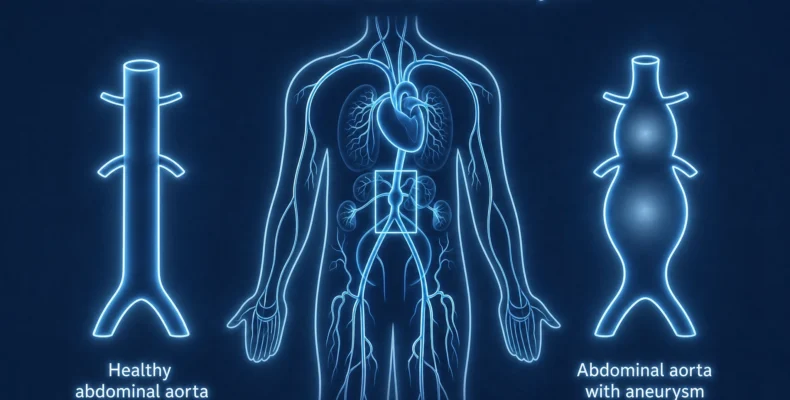
The aorta is the largest blood vessel in the body. It carries blood from the heart down through the chest and abdomen to supply the organs and legs.
An abdominal aortic aneurysm (AAA) occurs when a weakened section of the abdominal portion of the aorta gradually enlarges or “balloons” outward. Over time, the wall of the artery can become thinner and weaker.
Most aneurysms develop slowly over many years.
The main concern is that as the aneurysm enlarges, the risk of rupture increases. A ruptured aortic aneurysm is a medical emergency associated with severe internal bleeding.
Why Do Aneurysms Develop?
There is rarely a single cause. Instead, aneurysms usually develop due to a combination of aging, long-term stress on the artery wall, and underlying vascular disease.
Several factors increase the risk:
- Smoking (the strongest known risk factor)
- High blood pressure
- High cholesterol
- Atherosclerosis (“hardening of the arteries”)
- Family history of aneurysms
- Male gender
- Age over 65
Some patients also have underlying genetic or connective tissue disorders that weaken blood vessels.
Do Abdominal Aortic Aneurysms Cause Symptoms?
Many patients have no symptoms at all.
When symptoms do occur, they may include:
- A pulsating sensation in the abdomen
- Deep abdominal or back pain
- Pain in the flank or groin
- Sudden severe pain if rupture occurs
Because symptoms are often absent, aneurysms are frequently discovered during ultrasound or CT scans performed for unrelated reasons.

How Is an AAA Diagnosed?
The most common tests include:
Ultrasound
A quick, painless examination commonly used for screening and routine follow-up.
CT Angiography (CTA)
A more detailed scan using contrast dye to evaluate:
- Exact aneurysm size
- Shape and anatomy
- Relationship to kidney arteries and other branches
- Suitability for repair
CT imaging is particularly important when planning treatment.
Does Every Aneurysm Need Surgery?
Not necessarily.
Small aneurysms are often monitored with periodic imaging rather than treated immediately. The decision to intervene depends on several factors:
- The size of the aneurysm
- How quickly it is growing
- The patient’s symptoms
- Overall health and surgical risk
In general, larger aneurysms carry a higher risk of rupture and are more likely to require treatment.
Your vascular specialist will balance the risk of observation against the risk of intervention.
Modern Treatment Options
Treatment of abdominal aortic aneurysms has evolved dramatically over the past two decades.
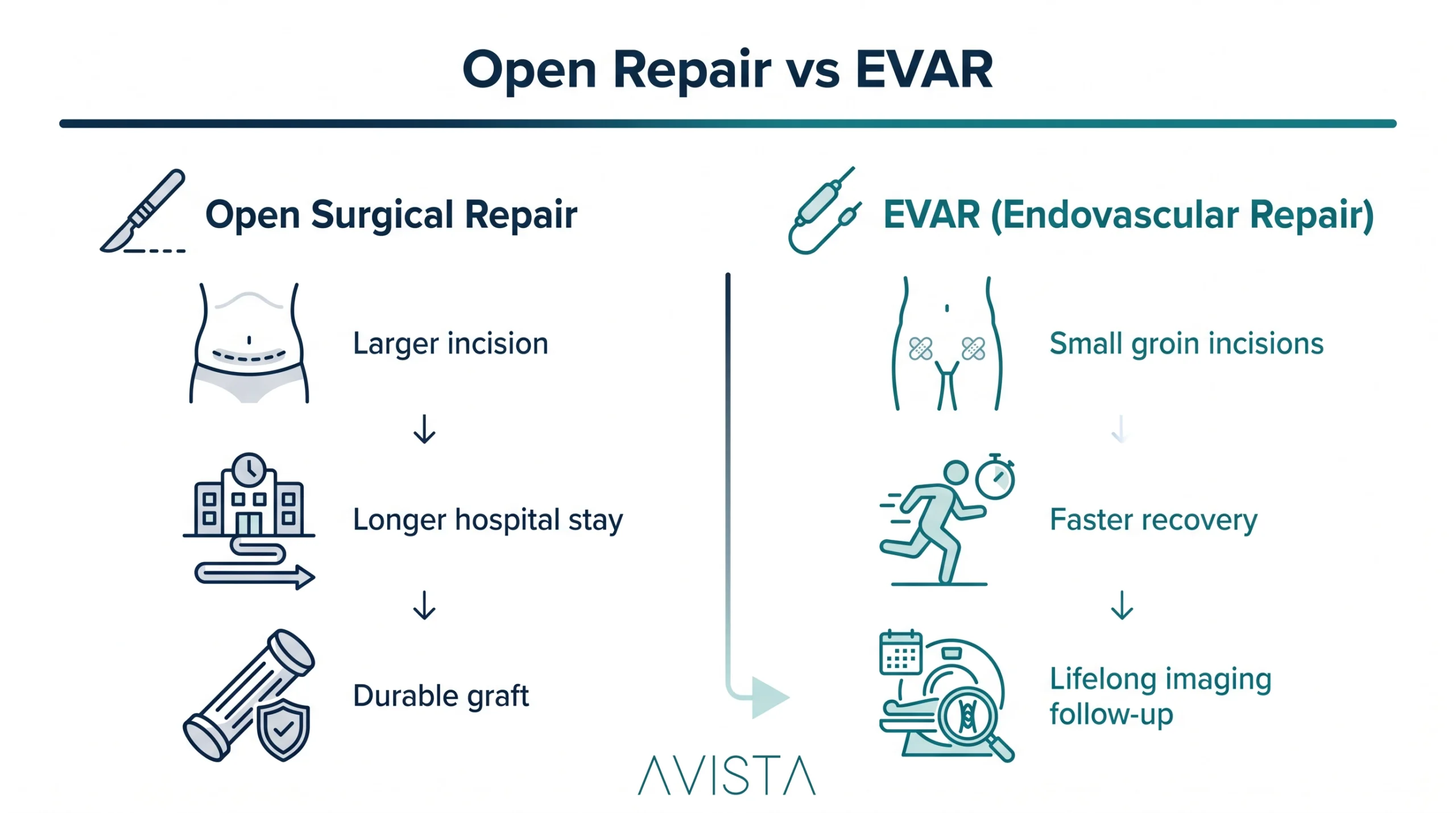
Open Surgical Repair
Traditionally, aneurysms were treated through open surgery, where the weakened section of the aorta is replaced with a synthetic graft.
This remains an important and durable option for certain patients, particularly younger individuals or those with complex anatomy.
Endovascular Aneurysm Repair (EVAR)
Today, many aneurysms can be treated using minimally invasive techniques.
In EVAR:
- Small incisions are made in the groin
- A stent-graft is inserted through the arteries
- The graft is positioned inside the aneurysm to reinforce the aorta and exclude the weakened segment from blood flow
Compared to open surgery, EVAR often offers:
- Shorter hospital stays
- Faster recovery
- Less pain
- Reduced early surgical stress
However, EVAR also requires lifelong imaging follow-up to ensure the repair remains stable over time.
Why Long-Term Follow-Up Matters

One of the most important things patients should understand is that aneurysm care does not end after treatment.
Even after successful repair, regular surveillance is essential. Over time, the aorta can continue to change, and some patients may develop:
- Endoleaks (persistent blood flow outside the graft)
- Enlargement of untreated segments
- Device-related complications
- Progressive vascular disease elsewhere
This is why long-term follow-up with a vascular specialist is critical.
Can Lifestyle Changes Help?
Absolutely.
Although lifestyle changes cannot reverse an aneurysm, they can slow progression and reduce overall cardiovascular risk.
Patients are strongly encouraged to:
- Stop smoking completely
- Control blood pressure
- Manage cholesterol levels
- Exercise regularly within physician guidance
- Maintain a healthy weight
- Follow prescribed medications carefully
These measures also reduce the risk of heart attack and stroke, which are common in patients with vascular disease.
Living with an AAA
For many patients, an abdominal aortic aneurysm becomes a chronic condition that is monitored carefully over time. With modern imaging, experienced vascular teams, and advances in minimally invasive repair, outcomes today are significantly better than they were a generation ago.
The key is early diagnosis, appropriate surveillance, and individualized treatment planning.
Patients should never hesitate to ask questions, seek clarification, or discuss concerns with their treating physician. Understanding the condition is an important part of managing it safely and confidently.
Closing Perspective
An abdominal aortic aneurysm is a serious condition, but it is also one that can often be managed very successfully when identified early and followed appropriately.
Modern vascular care is no longer focused solely on emergency treatment—it is increasingly centered around prevention, surveillance, and long-term durability.
For patients, knowledge is an important first step. Understanding the condition allows better decisions, earlier intervention when necessary, and ultimately safer outcomes.
If you or a family member has been diagnosed with an abdominal aortic aneurysm, the most important step is regular follow-up with a vascular specialist. For more patient information, talk to our team.